Showing posts with label Annamaria Alfieri. Show all posts

Bouchercon Week Re-post:Buenos Aires Through Their Eyes

By the time you read this, I will be in the car on my way to Albany for Bouchercon 2013.  Given the activities of the week, I am giving myself a break and re-posting my "researcher's notebook" from January 2012 when I went to Buenos Aires to research Blood Tango

Annamaria Alfieri


I am working on my third historical mystery — one that takes place in Buenos Aires. I came on this trip to get the feel of the city that is the backdrop for my story. After spending the past year reading deeply into the history of Argentina and especially of the Peróns and their times, I want to experience first hand the places I have been writing about. I have been here before, but not with such a story in mind.


On Day One of this research excursion, we took a tour of the Casa Rosada — the seat of the Argentine government. The palace is magnificent. It is pink because President Domingo Sarmiento (1811-1888) proposed they combine the Federalist red with the Unitarist white — to appease whichever of the violently opposing factions took precedence at any given moment during in the country's tumultuous 19th century history. The interior rooms are grand in the ornate style of that era.


My story does not go back that far; it takes place during October of 1945, a period when the Casa Rosada and the stately Plaza de Mayo in front of it were the focus of street demonstrations and popular uprisings. Chaos that ended on October 17th when Perón stepped out on the balcony of the Casa Rosada to address an estimated 300,000 low-level workers who had rallied to support him.


Perón called those men his descamisados — shirtless ones. In that era, men in Buenos Aires were required to wear jackets in public. They could not enter a restaurant or a movie theater without "proper attire." So the poorest laborers were not really shirtless, but jacketless. They did the dirtiest jobs in the country.


As elsewhere in the New World, the skilled laborers were European immigrants — mostly from Italy and Spain —Basques, largely — and some Irish and Germans who poured into the country during the tsunami of migration at the end of the 19th and beginning of the 20th centuries. They built buildings, made shoes, played music, all manner of work that required training. Argentina was rich then, off cattle, which were shipped live to England and the Continent. Once refrigeration was perfected, the meat was butchered in Buenos Aires and then shipped, rather than sending it on the hoof.

During the Great Depression, thousands of Indians and mestizos from the vast plains of the Pampas came to Buenos Aires looking for work just in time to man the slaughterhouses and the meat packing plants then springing up. These were Perón's descamisados. To secure them as his power base, from his position as Minister of Labor, he had raised their wages and gotten them health insurance and paid vacations. During the week before October 17th, his superior officers in the military government had forced him to resign. Now the descamisados wanted him back.

On that fateful day, they flooded into the center of the city from their villas miserias, slum towns, down across the Riachuelo to the south of the capital. They had never seen the city of Buenos Aires before. The "Paris of the South" must have seemed like a fairyland to them. They massed in the Plaza de Mayo and demanded their man.

I have walked some of the streets the men from the desolate interior walked on that day and tried to see through their eyes, buildings, wonderful even to me, who has seen the real Paris, Rome, Venice. Awestruck would be the word to describe it. To get the same feeling I have to imagine what it would be like to look at the earth from the moon.


Annamaria Alfieri

The Death of a Cannibal King


This month’s PUNchline entry:

Ichoo, the fiercest cannibal king in the jungle, was feared by all explorers who went to Faway Island.  As luck would have it, the only landing spot they could use to gain access to the remote atoll was in front of Ichoo’s thatched hut.

Many potential explorers unfortunately ended up in the king’s stewpot.  To avoid that fate, the intrepid anthropologist Dr. Niles Source decided to befriend the king by bringing him gifts.  Soon, the cannibal had so many possessions that he had to add a second story to his dwelling.  With each of Dr. Source’s visits, the greedy king warned him that on his next landing he must bring a more impressive offering.

On one trip Dr. Source arrived with an elaborate Victorian chair which he declared to be a throne fit for Ichoo.  The king was delighted. On fine days, he would have his lackeys carry the chair outside so he could sit resplendent in front of his hut.  As Source was leaving two weeks later, the king demanded another, even bigger chair on the explorer’s return.

And so it went, with each visit: a chair of carved mahogany, then one with red velvet upholstery, then another brocaded with the royal arms of England, and on and on.  Soon the ground floor of Ichoo’s hut was filled with some of history’s most elaborate chairs.  Finally, Dr. Source arrived with the pièce de résistance.  The back of the chair was taller than Ichoo, taller even than Niles Source; the seat was upholstered with royal purple silk, and the all of the beautifully carved wood was covered  with 18 carat gold leaf.  It shone in the sun like a throne for an all-powerful god.

Ichoo declared that he would never sit in any other chair.  His fellow tribesmen began lining up, hoping to take away the rest of his now distained collection.  But the king did not want anyone but himself to have such luxurious possessions.  He instructed his lackeys to put the rejected chairs on the second floor of his hut.

That night Ichoo’s hut collapsed from all the weight of his possessions, killing the greedy king.

The moral of the story is….

Annamaria Alfieri

Fifty Years Ago Today


Just yesterday, a website that I follow tweeted this image that captured how bad things were for blacks in the Depression and how insensitive was the general population.   Margaret Bourke-White took photo in the aftermath of the 1937 Louisville Flood.  It inspired me to write this post.

By now you have certainly been reminded of what happened on 28 August 1963.  Here is my tribute to the brave people who brought our country toward racial equality, not all the way, but out of the depths of racism in which we languished when I was born.  Our country’s history is awash in dreadful details.  I have chosen to make this largely a personal account of things that happened to me and my family.  I begin long before I was born.

In Matewan, West Virginia in 1920, coal miners began a strike.  The mine bosses, in an attempt to break it, sent in outside miners as scabs—Negroes and Italians, thought to be the natural enemies of the white West Virginians.  My grandfather, Andrea Puglisi, who had been mining coal in western Pennsylvania for the previous eight years or so, was among them.  Per force, he took along his family—my grandmother, Concetta Bruno and their four (at the time) children.  Salvatore, my dad, was not yet four years old.  In 1987, John Sayles made a brilliant film called Matewan, which tells the story of what happened once “the wops and the niggers” were brought in.  Here is an illustrative scene which includes the brilliant James Earl Jones. 

Years ago, when my father and I saw the movie together, he wept at another scene, a bit later in the movie, where all the striking and therefore homeless miners—white and black and immigrants—and their families are camping in a clearing in the woods.  In that setting, a white man begins to play music.  Soon all who can, regardless of ethnicity, are picking up instruments and joining in.  My dad remembered that time.  “My father played the concertina,” he said.

By the 1940’s and 50’s, when I was growing up, there were strong pockets of racism in my all-white working class neighborhood in Paterson, New Jersey.   Ethnic and racial slurs were pretty commonly hurled around—some of them against us Italian-American; some hurled by our own against others.   Sam, as everyone including his children called my dad, taught us never to use such terms against anyone.  He was a gentle father, not given to threatening his children.  But then one day, my brother Andy, who must have been about seven or eight, used the N-word at the dinner table.  My father put down his fork.  “Son,” he said to Andy.  His calling my brother that was in itself a warning.  “If I ever hear you use that word again, I will put soap in your mouth, and you will never forget the taste of it.”  Andy and I both learned a lesson from that admonition.

I went to a small, Catholic high school.  In my second year, the one and only colored boy I had ever been in school with joined the class a year below mine.  Sam’s anti-racist lessons had made me more than willing, regardless of the nasty comments by some of the other students, to do the lindy with him at school dances.  One of the boys in my year threatened me with punishment if I continued to dance with him.  My response was, “Don’t be stupid”—a goal extremely difficult for some of the snot-nosed bullies in my town.
The end of the summer following my college graduation brought us the event we commemorate today.   I heard a lot of talk then pro and con about the civil rights movement.  “It’s about time,” was Sam’s remark, seeing the events on our TV.  “I only pray they don’t get hurt for standing up for themselves.”  Some of them got very hurt.  Some of them died.  But they did not give up.

Right around that time, at my job in an insurance company in New York, I met my first husband—a tall, handsome African-American man, ten years my senior.  He was a New Yorker born and bred, educated, charming, and a devout Catholic—something my seventeen years of Catholic education had taught me was essential in a husband.  Our courtship began a few months later while trying to comfort each other over the assassination of President Kennedy.  We became engaged.  My parents did not object, but my mother worried.  “Who will marry your children?” she asked.  I told her they would marry who loved them.  The marriage did not produce life-long love, but it gave me my splendid daughter.

She did marry who loved her—a brilliant, devoted husband and wonderful father to their four children.  He is everything my mother would have wanted for her grandchild.  And no more than my daughter deserves.

I have lived to see the child of a marriage like mine become President of the United States.  Right now, the radio pundits in New York are talking about candidate Bill Di Blasio’s African-American wife and mixed-race son and what an asset they are to him in his campaign for mayor.  I grin whenever I hear that.

Racism, unfortunately, is NOT dead, but we all owe the progress we have made against it to the people we commemorate today.  Watch and listen.  Remember and be moved.
Annamaria Alfieri

Britglish vs. Amerglish


Writing, as I am now, about British East Africa in the early 20th Century, I have a new challenge—making my characters sound British and still have the dialog comprehensible to modern readers on the both sides of the pond.   The task is complicated by the fact that the scenes take place a hundred years ago.

The disparity between the two languages became apparent to me shortly after I left school, when an English friend pointed out the verbosity of English (as opposed to American) speech.  “In New York,” he said, “a stranger needing to break a large bill will walk up to you and say, ‘Hey, have you got change of a ten?’ But a Londoner will approach and say, ‘I beg your pardon and please forgive me for interrupting you, but I wonder if you would mind helping me.  I find that I am in need of smaller money than I am in possession of.  Would you mind at all, if you can, giving me change for this ten pound note.”  That friend was the first person I ever heard utter the chestnut: the United States and Great Britain, two countries separated by a common language.

He gave me a Xerox of a chapter of Mark Twain’s A Tramp Abroad, which I still have.  It begins like this:
“There was as Englishman in our compartment, and he complimented me on --on what? But you would never guess. He complimented me on my English. He said Americans in general did not speak the English language as correctly as I did. I said I was obliged to him for his compliment, since I knew he meant it for one, but that I was not fairly entitled to it, for I did not speak English at all--I only spoke American.

Twain goes on to make great fun of how the English pronounce the language through their noses (cow vs. käow, etc.)  But then he takes up usage and finishes the chapter, of course, with a punch line:
“When you are exhausted, you say you are 'knocked up.' We don't. When you say you will do a thing 'directly,' you mean 'immediately'; in the American language--generally speaking--the word signifies 'after a little.' When you say 'clever,' you mean 'capable'; with us the word used to mean 'accommodating,' but I don't know what it means now. Your word 'stout' means 'fleshy'; our word 'stout' usually means 'strong.' Your words 'gentleman' and 'lady' have a very restricted meaning; with us they include the barmaid, butcher, burglar, harlot, and horse-thief. You say, 'I haven't got any stockings on,' 'I haven't got any memory,' 'I haven't got any money in my purse; we usually say, 'I haven't any stockings on,' 'I haven't any memory!' 'I haven't any money in my purse.' You say 'out of window'; we always put in a the. If one asks 'How old is that man?' the Briton answers, 'He will be about forty'; in the American language we should say, 'He is about forty.' However, I won't tire you, sir; but if I wanted to, I could pile up differences here until I not only convinced you that English and American are separate languages, but that when I speak my native tongue in its utmost purity an Englishman can't understand me at all."
"I don't wish to flatter you, but it is about all I can do to understand you now."
That was a very pretty compliment, and it put us on the pleasantest terms directly--I use the word in the English sense.”

If you want, you can read the whole chapter here:


To serve my prissy desire to get history right in my novels, I found the most wonderful website.  It gives the meanings of idiomatic expressions in Britglish and even tells when they came into use.  A boon for an American writer who wants to make sure her British-isms are not anachronistic.  If you have a mind to browse it, here it is:


For myself, my editor asked about some of the phrases I used in Strange Gods.  Here is what I answered in an email last week:
“Regards Britglish vs. Amerglish:
                In this latest version, I have three instances where the characters, in dialog, use the word “whilst” as is still commonly used by the educated Brits.
                You questioned three expressions that are British-isms.  We can Amercanize them if they are too distracting.  I tried to make these people sound British to American ears and would like to maintain that, but not if it is disturbing.
                Page 100: Cranford says “Rum business.”  Modern Americans would say “Crazy business,” but that would not sound right to me coming out of that snob’s mouth.
                Page 155: Cranford again:  he says “that will be an end on it,” which is how Brits say “that will be the end of it.”
                Page 206: Nurse Freemantle says, “Vera is from home.” An American would say “Vera is not home.”

My editor said we should leave them the way I had them.  I am really glad of that.  If, once the book is out, I get any flack about this from readers, I have my response ready.  I will just shout, “Popycock!”

It's Here! The Book Trailer for Blood Tango


On June 26th, I posted about the making of this book trailer.  Well, it has launched, and I love it.  
The choreography for the premier dancers is a metaphor for the relationship between Juan Peron and Evita as it is portrayed in the story.  The curly-haired dancer in the flower print dress is my daughter Kerry Ann King, who produced the video.  I am proud of the film and of her!


Annamaria Alfieri

The Sex Lives of Aquatic Mammals


Guess the PUNch line:

Bjorn Friede wanted to be the first zoo keeper to breed porpoises in captivity, but no matter what he did, he could not get the animals to mate.  Finally, he convinced the director of the zoo to allow him to go on a field trip to see if he could find out what would put the porpoises in the mood.

After traveling thousands of miles, Bjorn found a beautiful tropical lagoon where he could sit on the shore and watch the porpoises in their native habitat.  He watched them swim and play and mate, but he came to no conclusion about what triggered the mating behavior.  Then, he suddenly noticed that each porpoise mating was preceded by raucous calling by the mynah birds in the trees over his head.  He observed the scene for a few more days and became convinced:  the bird calls were some sort of aphrodisiac for the porpoises.

Bjorn hurried back to the zoo with a plan to borrow two mynahs from the aviary.  Bjorn was about to make zoological history.
But Al Katraz, custodian of the aviary, wouldn’t agree to lend Bjorn the birds.  He was envious of Bjorn, whose porpoise charges gave shows and attracted so many more visitors than the aviary, to say nothing of Bjorn’s recent jaunt to a tropical paradise at zoo expense.    Katraz was adamant—the mynah birds were too valuable to submit them to the dangers of being moved to the porpoise pool.
Bjorn was determined, in spite of everything, to have his way.  He hatched a daring plan to kidnap the birds in the middle of the night.  The only problem was that Bjorn was sure Al Katraz would be on his guard for just such a scheme.  In fact, he had seen that Al was spending a lot time with Hans Hupp, the head of zoo security.
The shortest way from the aviary to the aquatic mammal pool was through the lion’s den.  Bjorn decided it was the only way.  To make sure he didn’t have any trouble with the cats, he added a strong animal tranquilizer to their food when no one was looking.

That night, he stole into the aviary, took the birds, and tiptoed into the lion’s cage, but he found that two huge sleeping males had lain down right in the doorway.  Frightened but determined, Bjorn crept up to the sleeping lions.  Just as he began to climb over them, bright lights went on all around him.

Hans, Al, and the local sheriff were all there.  Bjorn was arrested and the sheriff charged him with…….
You name the crime!

Leighton Gage, a Personal Remembrance

At Bouchercon in Indianapolis in 2009, Leighton Gage moderated a panel called Murder at the Edge of the Map. The other writers on the dais included Yrsa and Stan. Since my first novel, out just a month, was set not only far away, but long ago, I was anxious to hear what other, more experienced writers had to say on the subject of stories set in exotic locations. The meeting room was packed with people.

Leighton showed the audience a bracelet he wore, made by a Brazilian Indians, that was a charm to boost one’s creativity. I remember wishing I had such a thing, but I was too shy to introduce myself to Leighton, much less ask him where I could get one. Had I been more courageous, I have no doubt he would have sent me one, if not taken his off and given it to me on the spot. That was the kind of man he was: generous, giving, helpful, encouraging. But I did not know that yet.

Several months later, out of the blue, an email from Leighton arrived in my inbox. He had searched me out to tell me that he had read City of Silver as part of his service on the Edgar Awards jury for best first novel. He had been disappointed that the book had not garnered a nomination, and he was talking it up on internet chat rooms because he knew how difficult it is to get a good book noticed. He invited me to Murder is Everywhere to do a guest post. He stayed in touch, always encouraging, open, warm, and charming.

Then, one day, we found we would both be in Italy at the same time. He came with his friend Jes to visit me in Florence. We had two days to eat good food, drink good wine, and talk writing, books, the biz, life. In those days, Leighton learned of my husband’s Alzheimer’s disease. One of the things I confessed to him was that my weekends were lonely, when I was caring for David on my own and when the love of my life could no longer be a companion. After that, on Fridays Leighton would write me an email posing a subject for discussion, usually one having to do with writing fiction. Then, through the weekend, he would keep me company in long written conversations.

In the past few days, with comments here on Murder is Everywhere and on Facebook, it has become clear how many people Leighton befriended in just such ways. It’s impossible to fathom how he had the time to do all that while being a loving husband and father AND writing such wonderful books—one every year.

The people Leighton gathered around him are themselves a warm, welcoming, affectionate bunch. They are generous and bring out the best in one another. They are different from Leighton and from each other in many ways, but not in all the virtues one would desire in a colleague and friend. He brought out in others what was wonderful in himself. It seems a magic trick, but he performed it. Then he gave us one another.

My gratitude and love and admiration are Leighton’s forever.

Annamaria Alfieri

How is the Book Doing?

Within a couple of days of the launch of BLOOD TANGO, people not connected with the publishing industry started asking me, "How is the book doing?"  Depending on how much I cared about the person asking the question and, more importantly, how much I wanted that person's approval, I answered with evasions or the truth.

Typical evasions:
"The launch party went well, was well-attended."
"I have bunch of events scheduled and have high hopes."
"It's kind of early to tell, but with the author appearances I have scheduled, it should get a boost."
"I am happy with it so far."

The truth:
"I have no idea.  My publisher will send me a royalty statement in January, and I will find the thousand or so numbers on the page incomprehensible."

More truth:  If the royalty statement comes with even a small check, I will be ecstatic, but I never say that to anyone.  (But I have said it to you.)

For the past ten days, in response to that question, I have brought up the instructive story of J.K. Rowling's experience as an unknown, first-time author and what happened after her lawyer betrayed her, and it became known who actually wrote that now runaway best seller.

In the meanwhile, a mystery writer friend told me how to use Amazon Author Central.  Now I can get news every Friday morning.  Not complete news, but news.  In week one the report was not fabulous, but okay and interesting, especially given the fact that Blood Tango is selling the backlist--a surprise since my books so far have been stand-alones.  In week two it was dismal.
?
I persist with my promotional activities.  I'll keep you posted.

Annamaria Alfieri

The Answer and a New Question

Someday I will get the hang of this contest idea.  I keep trying new approaches.  I will quit eventually if it never works, but we all know that persistence is essential to fiction writing and mine is measurable close to, if not at the psychotic level.

In last week's contest--my third attempt--no one was able or cared enough to win a copy of Blood Tango by coming up with the PUNch line of a pretty bad joke.  Not even with hints and begging from yours truly.

The answer is:

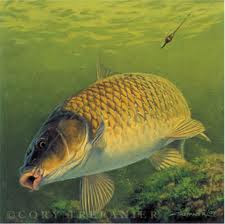
....carp-to-carp walleting.

If you never saw the question, I won't tell you where to find it because you'll not only groan (as those in the know just did) , but you will hate me.  Not what I had in mind.  This pathetic behavior is actually my attempt to win friends by being amusing.

So the autographed copy of Blood Tango is still on offer to anyone who can identify the thing in this picture and write its name in the comments.  I wish us all luck.  I know I am going to need it.
 

PS: I took the picture myself!

Annamaria Alfieri

A Contest: Win an Autographed Copy of Blood Tango


First the beginning of the story:


Like many of his ilk, Malcolm Tent was a fisherman given to exaggeration.  One day he had an experience he was sure no one would believe so he never told anyone the story until he told it to me.  Now I will tell it to you.
It seems Mal was out in his boat fishing for carp one day.  The fishing was good, and he was reeling them in.  As he was removing a big one from his hook, he pricked the end of his finger, which started to bleed a little.  Mal reached into his pocket for his handkerchief.  As he pulled it out, his wallet fell out of the pocket, over the side of the boat, and began to sink out of sight before he could grab it.

Mal groaned, but he hardly had a second to comprehend the accident when a fish came to the surface with the wallet balanced on its nose.  Soon another fish came to the surface, and like a pair of seals with a ball at the zoo, they flipped the wallet around in a game of catch, and finally back into the boat.
Mal gave up fishing and exaggerating after that.  And he only once described how he became the only human being ever to see ….

A copy of Blood Tango to the first person to guess the ending and write it in the comments below. 

Dancing to Promote Blood Tango

Last evening was the launch party for Blood Tango at wonderful Mysterious Bookshop on Warren Street in New York.  Among the dear friends who attended was Dan Gaba, photo editor for The Wall Street Journal.  Here is the photo you get when a consummate professional attends your launch.  THANK you, Dan.


I am really too distracted by the events of this week to write a cohesive sentence, much less a whole blog.  In fact, i am on my way in just a couple of hours to Dag Hammarskjold Park near the UN, where my Daughter is staging a tango flash mob to promote the book.  I am bringing the rented generator to run the sound equipment.  It is strapped into the passenger seat of my tiny sports car.

So in anticipation of my own flash mob to share, I am posting a couple of tango from YouTube.  The one I like best is the on of Florence in the snow.  All that snow is an extremely rare sight there.


Once the Blood Tango Flash Mob is edited, you will see it here.

Annamaria Alfieri

The Trip So Far


On the road again.  I left New York on Monday for Matlacha (pronounced mat-le-SHAY), Florida on my way to the Historical Novel Society Conference in St. Petersburg.


My first surprise was the brand new Delta Airlines terminal at LaGuardia.  The space at the gates, rather than being filled with quasi-comfortable chairs, is almost entirely taken up with one-person booths, each one equipped with an iPad on which you can check the status of your flight, order food and drinks to then pick up at the bar, read uninspiring internet newspapers—like USA Today, or play hangman.  There is almost no place else to sit while one is waiting for a flight, except for a tight row of chairs along the windows, almost all of which are marked as reserved for the handicapped.  The whole place carries the air of that interstellar café from the first Star Wars movie, and you expect to see large hairy creatures with yellow and green striped horns playing music through their clarinet-shaped noses.

But I came prepared.   I had begun to read Deadly Harvest, Michael Stanley’s latest Detective Kubu novel, as soon as I laid my hands on it at CrimeFest at the beginning of the month.  But though it took a LOT of self-control, I restrained myself and saved the last half of it for the plane ride to Florida.  Good thing too, as the flight was awfully bumpy and only by putting my head in Botswana with Kubu and his new colleague Detective Samantha Kama could I maintain my cool with no one to hold my hand.  Kubu did NOT let me down.

The blue dot is the middle is Matlacha
Here I am now on a relatively unspoiled part of the Florida’s west coast, visiting my friend and fellow writer, Marta Rangel Gibbons.  Marta and her husband Michael are recent transplants to these precincts from up north and in addition to their home, own two cottages, which they rent.  They took me on a tour of them and ever since I saw the smaller one, I have been fantasizing how perfect it would be as a writing getaway when the snow starts to fly in New York round about next January.


View from the back deck of Green Cottage
Marta kindly arranged three appearances for me, the first of which was at a meeting of The Pine Island Writers, which took place just hours after I arrived.  I will go on to speak at the Lehigh Library on Wednesday and the Pine Island Library on Thursday, just before Marta and I set off for the HNS conference.

 It will be my first attendance and I am looking forward to it beginning on Thursday evening.   More about which I will post at some point soon.

Annamaria Alfieri


Dateline London and Bristol: CrimeFesters


 My recent trip to England had two goals: to have at the extensive collection of the British Library for research on my forthcoming African series and to attend CrimeFest, an international conference of crime writers.  Not to mention my need for escape and a dose of faraway places to quell my wanderlust.

After many arrangements, some quite frantic, late on May 25th, my plane took off for Heathrow.

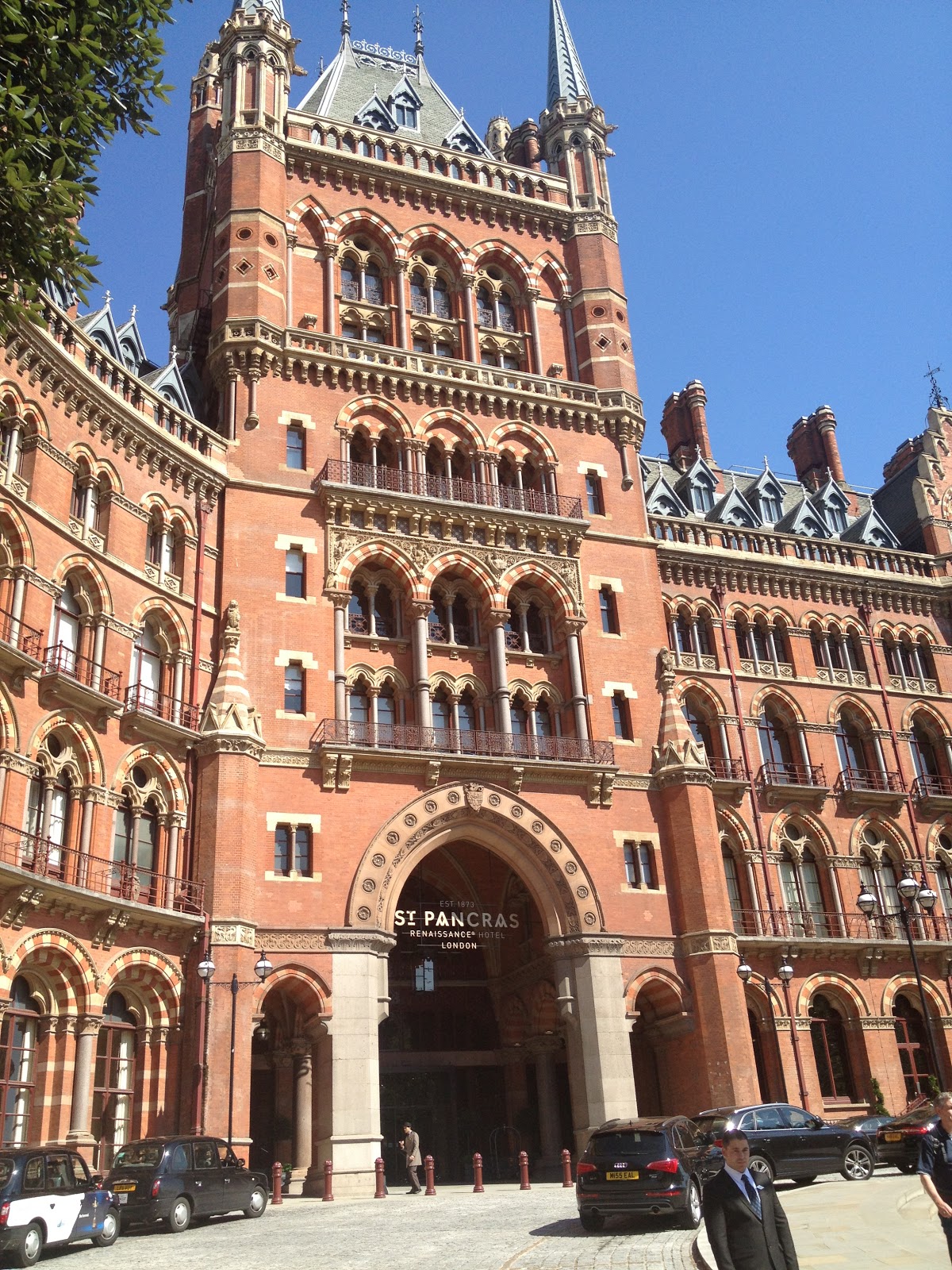
I had gazillions of miles of business travel under my belt, but it had been more than a decade since I had gone solo internationally, and I was trepidatious. The only practical way I could think of to fight my pre-travel anxiety was to buy (at unconscionable expense) a super-light suitcase that would give me at least a fighting chance of muscling (term used advisedly) my luggage on and off trains without help.  Said wonder-grip has four wheels and shortly after my arrival, it tried to escape by rolling down the aisle of the Tube train from the airport to St. Pancras Station.  It was headed directly for a three-year-old in a stroller.  Luckily for the baby, her dad stopped it in time, and with lovely British manners, suggested he might turn it on its side so it would stay put.

The hotel end of St. Pancras Station
St. Pancras Station is a splendor of Victorian red brick gingerbread that had been allowed to go to rack and ruin until it was recently turned back into a palace of rail travel, this time with ticket windows and train platforms, but also lots of shopping and an upscale hotel.  Since the British Library is just across the street, I chose to spend two nights in that new, quite swanky hostel.

1909 English gown and hat
On Sunday, after a full English breakfast that served as lunch for my jet-lagged tummy, I made for the Victoria and Albert Museum, where I looked at early 20thCentury clothing.  Very elegant. 

The British Library at St. Pancras
That Monday morning, I crossed the street to the British Library, carrying a notebook and many well-sharpened pencils (no pens allowed near the books).  The BL has the second largest collection in the world, topped only by the Library of Congress. Its unparalleled mass of material on British East Africa before 1920 was my target.  But The British Library is unlike the marble palace of free knowledgethe New York Public Librarythat I have bragged of frequently on these pages.  For one thing, the BLs modern building looks like a prison from some vantage points.  For another, one cannot just walk in, ask for knowledge, and receive it.  Readers need credentials.  Hoping for a full day and a half to immerse myself in Africanalia, I had used the BL website to preregister and request materials.  All I would need to do was present my multiple proofs of identity and residence, and I would be in.  I thought.

As it turns out, our Memorial Day is also a holiday in the UK; it goes by the pedestrian name Bank Holiday Weekend.  Though the library was open for visiting the exhibitions, the reading rooms and the credentialing center were closed.  Boohoo.

Cheer up, I told myself, you are in London; its not as if there is nothing else to do.


The British Museum was a mere fifteen minutes walk away.   There I visited the African art rooms and found several things that were from the area and period of my new series.  Here are a few that are sure to show up in future stories.

Kikuyu Witchdoctor's rattle
Early 20th Century Masaai Swords
After a Tuesday morning spent reading those elusive library books, I took the train to Bristol, scene of the CrimeFest, which I walking-toured on Wednesday.  It is a post-industrial port city that made its early fortune on the slave trade, is a university town, and has some splendid ancient buildings, but a hip, twenty-first century energetic vibe.
Interior Bristol Cathedral

Ancient monument in St. Stephen's Church, Bristol, with modern addition 


CrimeFesta mystery conference with a solid international focusran from Thursday to Sunday, and I had a chance to attend many very interesting and extremely witty panels where writers I admire presented.   And to get acquainted with new writers whose work I know I will enjoy.  Best of all was the time I spent with some dear and delightful writer friends.

CrimeFesters: Stan Trollip (Michael Stanley), me, Jeff Siger, Caro Ramsay,
Yrsa Sigurdardottir,and Michael Sears (Michael Stanley)
I also got to meet Sherlocks brother Mycroft.


Mark Gatiss with Emma's drawings
My darling granddaughter Emma is a huge fan of the British TV series Sherlock.  When she found out that its creators and one of its stars would be presenting at CrimeFest, she gave me some of her original drawings to present to Mark Gatiss, who plays Mycroft Holmes and also writes some of the episodes.  CrimeFest returned Emmas favor.  At Saturday evenings awards banquet, I bought a raffle ticket and won---an autographed set of the DVDs of Sherlock seasons one and two, which will be delivered to Emma forthwith (as the Brits say) now that her Nonna is home.


Annamaria Alfieri