Showing posts with label Blood Tango. Show all posts

Bouchercon Week Re-post:Buenos Aires Through Their Eyes

By the time you read this, I will be in the car on my way to Albany for Bouchercon 2013.  Given the activities of the week, I am giving myself a break and re-posting my "researcher's notebook" from January 2012 when I went to Buenos Aires to research Blood Tango

Annamaria Alfieri


I am working on my third historical mystery — one that takes place in Buenos Aires. I came on this trip to get the feel of the city that is the backdrop for my story. After spending the past year reading deeply into the history of Argentina and especially of the Peróns and their times, I want to experience first hand the places I have been writing about. I have been here before, but not with such a story in mind.


On Day One of this research excursion, we took a tour of the Casa Rosada — the seat of the Argentine government. The palace is magnificent. It is pink because President Domingo Sarmiento (1811-1888) proposed they combine the Federalist red with the Unitarist white — to appease whichever of the violently opposing factions took precedence at any given moment during in the country's tumultuous 19th century history. The interior rooms are grand in the ornate style of that era.


My story does not go back that far; it takes place during October of 1945, a period when the Casa Rosada and the stately Plaza de Mayo in front of it were the focus of street demonstrations and popular uprisings. Chaos that ended on October 17th when Perón stepped out on the balcony of the Casa Rosada to address an estimated 300,000 low-level workers who had rallied to support him.


Perón called those men his descamisados — shirtless ones. In that era, men in Buenos Aires were required to wear jackets in public. They could not enter a restaurant or a movie theater without "proper attire." So the poorest laborers were not really shirtless, but jacketless. They did the dirtiest jobs in the country.


As elsewhere in the New World, the skilled laborers were European immigrants — mostly from Italy and Spain —Basques, largely — and some Irish and Germans who poured into the country during the tsunami of migration at the end of the 19th and beginning of the 20th centuries. They built buildings, made shoes, played music, all manner of work that required training. Argentina was rich then, off cattle, which were shipped live to England and the Continent. Once refrigeration was perfected, the meat was butchered in Buenos Aires and then shipped, rather than sending it on the hoof.

During the Great Depression, thousands of Indians and mestizos from the vast plains of the Pampas came to Buenos Aires looking for work just in time to man the slaughterhouses and the meat packing plants then springing up. These were Perón's descamisados. To secure them as his power base, from his position as Minister of Labor, he had raised their wages and gotten them health insurance and paid vacations. During the week before October 17th, his superior officers in the military government had forced him to resign. Now the descamisados wanted him back.

On that fateful day, they flooded into the center of the city from their villas miserias, slum towns, down across the Riachuelo to the south of the capital. They had never seen the city of Buenos Aires before. The "Paris of the South" must have seemed like a fairyland to them. They massed in the Plaza de Mayo and demanded their man.

I have walked some of the streets the men from the desolate interior walked on that day and tried to see through their eyes, buildings, wonderful even to me, who has seen the real Paris, Rome, Venice. Awestruck would be the word to describe it. To get the same feeling I have to imagine what it would be like to look at the earth from the moon.

Annamaria Alfieri

It's Here! The Book Trailer for Blood Tango


On June 26th, I posted about the making of this book trailer.  Well, it has launched, and I love it.  
The choreography for the premier dancers is a metaphor for the relationship between Juan Peron and Evita as it is portrayed in the story.  The curly-haired dancer in the flower print dress is my daughter Kerry Ann King, who produced the video.  I am proud of the film and of her!


Annamaria Alfieri

How is the Book Doing?

Within a couple of days of the launch of BLOOD TANGO, people not connected with the publishing industry started asking me, "How is the book doing?"  Depending on how much I cared about the person asking the question and, more importantly, how much I wanted that person's approval, I answered with evasions or the truth.

Typical evasions:
"The launch party went well, was well-attended."
"I have bunch of events scheduled and have high hopes."
"It's kind of early to tell, but with the author appearances I have scheduled, it should get a boost."
"I am happy with it so far."

The truth:
"I have no idea.  My publisher will send me a royalty statement in January, and I will find the thousand or so numbers on the page incomprehensible."

More truth:  If the royalty statement comes with even a small check, I will be ecstatic, but I never say that to anyone.  (But I have said it to you.)

For the past ten days, in response to that question, I have brought up the instructive story of J.K. Rowling's experience as an unknown, first-time author and what happened after her lawyer betrayed her, and it became known who actually wrote that now runaway best seller.

In the meanwhile, a mystery writer friend told me how to use Amazon Author Central.  Now I can get news every Friday morning.  Not complete news, but news.  In week one the report was not fabulous, but okay and interesting, especially given the fact that Blood Tango is selling the backlist--a surprise since my books so far have been stand-alones.  In week two it was dismal.
?
I persist with my promotional activities.  I'll keep you posted.

Annamaria Alfieri

The Answer and a New Question

Someday I will get the hang of this contest idea.  I keep trying new approaches.  I will quit eventually if it never works, but we all know that persistence is essential to fiction writing and mine is measurable close to, if not at the psychotic level.

In last week's contest--my third attempt--no one was able or cared enough to win a copy of Blood Tango by coming up with the PUNch line of a pretty bad joke.  Not even with hints and begging from yours truly.

The answer is:

....carp-to-carp walleting.

If you never saw the question, I won't tell you where to find it because you'll not only groan (as those in the know just did) , but you will hate me.  Not what I had in mind.  This pathetic behavior is actually my attempt to win friends by being amusing.

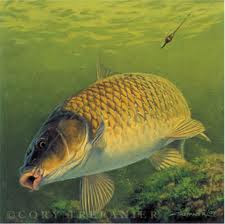
So the autographed copy of Blood Tango is still on offer to anyone who can identify the thing in this picture and write its name in the comments.  I wish us all luck.  I know I am going to need it.
 

PS: I took the picture myself!

Annamaria Alfieri

A Contest: Win an Autographed Copy of Blood Tango


First the beginning of the story:


Like many of his ilk, Malcolm Tent was a fisherman given to exaggeration.  One day he had an experience he was sure no one would believe so he never told anyone the story until he told it to me.  Now I will tell it to you.
It seems Mal was out in his boat fishing for carp one day.  The fishing was good, and he was reeling them in.  As he was removing a big one from his hook, he pricked the end of his finger, which started to bleed a little.  Mal reached into his pocket for his handkerchief.  As he pulled it out, his wallet fell out of the pocket, over the side of the boat, and began to sink out of sight before he could grab it.

Mal groaned, but he hardly had a second to comprehend the accident when a fish came to the surface with the wallet balanced on its nose.  Soon another fish came to the surface, and like a pair of seals with a ball at the zoo, they flipped the wallet around in a game of catch, and finally back into the boat.
Mal gave up fishing and exaggerating after that.  And he only once described how he became the only human being ever to see ….

A copy of Blood Tango to the first person to guess the ending and write it in the comments below. 

Dancing to Promote Blood Tango

Last evening was the launch party for Blood Tango at wonderful Mysterious Bookshop on Warren Street in New York.  Among the dear friends who attended was Dan Gaba, photo editor for The Wall Street Journal.  Here is the photo you get when a consummate professional attends your launch.  THANK you, Dan.


I am really too distracted by the events of this week to write a cohesive sentence, much less a whole blog.  In fact, i am on my way in just a couple of hours to Dag Hammarskjold Park near the UN, where my Daughter is staging a tango flash mob to promote the book.  I am bringing the rented generator to run the sound equipment.  It is strapped into the passenger seat of my tiny sports car.

So in anticipation of my own flash mob to share, I am posting a couple of tango from YouTube.  The one I like best is the on of Florence in the snow.  All that snow is an extremely rare sight there.


Once the Blood Tango Flash Mob is edited, you will see it here.

Annamaria Alfieri

Tribal Archetypes as Characters in a Mystery


Let me begin with a disclaimer:  I don't think I could ever write a story that I would want to read by following a formula.  BUT, that said, my stories pretty much always wind up with three people who play archetypal roles and who must cooperate and communicate if the mystery is going to be solved.   No teamwork, no solution.  Keeping secrets means screwing things up and delaying the process, which in storytelling can be a good thing.  Somehow in my novels, I always wind up with characters who assume the three tribal roles: The King, the Priest, and the Warrior.

In my old day job as a management trainer and consultant, these archetypes were an interesting way to analyze and figure out what might be going wrong in the leadership/management of an organization.  The roles have nothing to do with the person’s actual job title or position in society.  They are defined by how the people behave in the context of their tribe.  Here’s a way to think about them in real life and in mystery stories:
  • ·         The King is the person who defines the goals, who gives the group its vision of itself and helps it rise above its self-imposed limits.  Kings can do this with words, like “I have a dream…”  Mostly they do it by example.  And image.  The King doesn’t have to be charismatic, although that helps.   She does have to see beneath her followers’ surfaces and beyond their horizons.  He has to know their potential and declare it to them.  Spur them on.  Unleash their power.   Good Kings harness people’s idealism.  Bad ones tap into their fears and selfishness.  In mystery stories, the King is usually the character charged with or motivated to get to the bottom of the crime.  Often, he has others around him who are not so gung-ho but whose cooperation he needs.
  • ·         The Priest is the one who defines right and wrong, who tells anecdotes that remind people of who they are and how to judge what they do.  She asks the challenging questions and tells the old war stories—happy ones that define right behavior, and sad ones that warn against mistakes.  Many good mysteries have detectives—amateur or otherwise—who can easily go astray and want to break the rules to find and punish the evildoer.  This kind of character needs someone to keep him from straying too far from the straight and narrow.  In police procedurals, the Priest is hardly ever the detective’s boss.   More likely, it’s his sister or her son.


  • ·         The Warrior is impatient for action and gives the group its sense of urgency.  He is the brave soul willing to go out and wrest victory from the jaws of defeat.  She is not afraid to make a mistake.   Many mystery novels give us a younger sidekick who is the warrior, but who can easily turn into a loose cannon.
       In many mystery novels, we get a loner detective, alienated from the world, perhaps despised by his fellows at work and plagued with a dysfunctional family or none or all.  He (almost all these characters are men) must embody all the tribal roles or the story has to do without what the missing ones would add.  That this hero has to be everybody at once would make him hard to accept as an ordinary human.  Therefore, he must have a huge flaw to prove to us that is he is a person not a super hero.  Usually, his creator solves this problem by making him a drunk.   I have no capacity at all to imagine what it would be like to live in such a person’s skin.  So I have to give my characters other people to work with.


When I was writing City of Silver and Invisible Country, three characters in each story fell into the archetypal roles without my really knowing what I was doing.  In retrospect I can see them for what they are.  The King is an Abbess in City of Silverand the pastor in Invisible Countryactually fulfills the role of the King.  Strangely enough, though both stories have characters who are priests, neither man fulfills the role of Priest.  In one the Priest archetype is a nun and in the other the Priest is a shy village woman.  In both those books, the Warrior is a young woman. 

In the mystery plot of Blood Tango, the detective is the King, the dressmaker—a woman in her forties—is the Warrior, and the dressmaker’s father—a man in his seventies—is the Priest.   The subplot deals with the political turmoil of Buenos Aires in 1945.  In that story Juan Perón is the King.  Evita, his mistress, soon to be his wife, is the Warrior.  They do not have a Priest.  If you ask me, they could have used one.


Annamaria Alfieri

Photo Essay: Evita's Clothes

Deadline for Strange Gods: May 1.  I am going to make it.  So with no time to spare, I present some photos, many taken at the Evita Museum in Buenos Aires while researching Blood Tango.  BT launches on June 25th and features Evita, her dressmaker, and her body double.


Annamaria Alfieri

Favorite Typos of All Time


Some people come into this world nicely dominant in their left brains and therefore neurologically prepared to spell well and find typos at a glance.  I am not one of those.  I am right-handed and right-footed, but left-eyed: therefore stumped by spelling and blind to bumbled typing.

Sister Mary Catharine O’Connor, who taught me creative writing, had two PhD’s from Columbia University—one in English Literature and one in Education.  Her short stories were published in The New Yorker.  She was brilliant and uncompromising.  When we handed in a paper, she required us to write “Proofread” on the cover page and sign our names.  And if she found a fourth typo in the paper, she stopped reading, and no matter what it contained, the paper would never get an “A.”  She despaired of me.  I still have the dictionary she gave me in 1961, out of that desperation.  I revere her memory.  But nothing she did could unscramble my brain and make me good at seeing my own mistakes.

Those were the days of Olivetti portables and no spell check.

My most inconvenient mistake came, not in school, but in an article I wrote while working in the training department of a Wall Street bank.  I had devised a program to recruit women from the welfare rolls, to teach them skills that would qualify them for jobs in the bank, and to get them on their way to supporting themselves and their families.  The banking community took an interest in the work, and I was asked to write an article describing it for an industry newspaper.  As published the article contained only one wrong letter—a “w” instead of “t.”  What I meant to say was “This program is not available to the public.”   Except that it came out “now available.”  Thousands of phone calls later. . .

Writing on a computer with spell check has improved matters measurably, but perfection still escapes me, as regular readers of this blog have undoubtedly noticed, to my great embarrassment.
My consolation is that I am not alone in this impairment.  Typos have escaped into print in books.  My favorite is in the first edition of Bubbles, the autobiography of Beverly Sills.  Knowing how I loved the opera and admired Ms. Sills, my mother-in-law gave me a copy one Christmas.  The first line reads, “I was only three years old the first time I sang in pubic.”

This past week, I have been proofreading (with trepidation) the first pass pages of Blood Tango, set to launch on June 25th.  I am probably missing some things, but luckily I caught a typo (not mine but the typesetters’ I am happy to say) that is potentially as embarrassing as the one in Beverly Sills’s book.  In this case an “r” has been substituted for an “s.”  Just one letter!  Near the bottom of page 15, a paragraph begins, “But Tulio Puglisi knew in his boner that stopping Evita. . .” 

These are my favorites.  Tell us yours.

Annamaria Alfieri